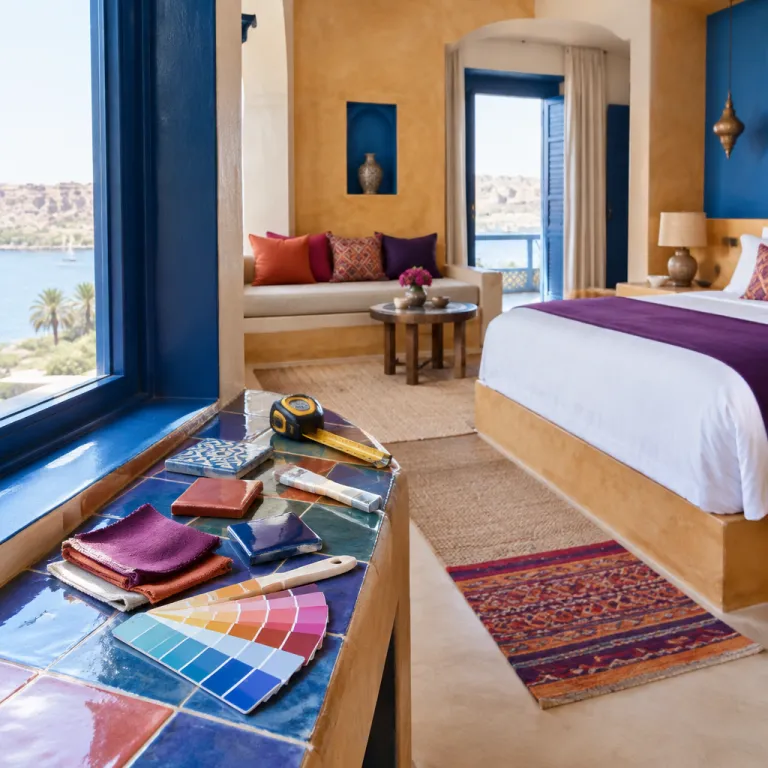
From global beige to egyptian colour: why the shift matters
For years, conversations about egypt hotel interior design 2026 circled the same safe palette. International chains in Cairo and across Egypt leaned on a universal luxury look, where marble floors, gold accents and anonymous interiors could belong to any city. That globalised approach to hotel design made sense for risk averse owners, especially those with real estate portfolios stretching across the Middle East and Saudi Arabia.
Standardised interior design meant that one design firm could roll out identical guest rooms and suites from Cairo Egypt to Jeddah, reducing costs and simplifying maintenance. The result was a generation of projects where the architecture design might nod to local arches, yet the interior stayed stubbornly beige, with furniture and fabrics chosen from the same catalogues. For guests, the experience was often high on comfort but low on a sense of place, and many hotels felt like airport lounges rather than Egyptian maisons of character.
Today a different mood is shaping egyptian hotel design, driven by owners who want their property to feel rooted in the city and landscape. They are commissioning a new wave of interior designers and design studios who treat Egypt not as a theme, but as a material library and cultural archive. This shift is not about nostalgia for ancient Egypt alone; it is about contemporary interiors that use colour, craft and light to express a confident, modern Egypt International identity.
Nubian blues, desert ochres and the new egyptian palette
Walk into the latest luxury hotel openings on the Nile and the change in interior is immediate. At the St. Regis Cairo, for example, deep blues and warm neutrals frame Nile views, while in Aswan’s Sofitel Legend Old Cataract, renovated in the 2010s, rich reds and sandstone tones echo the cliffs outside. Instead of cold marble and mirrored walls, you now find Nubian blues, desert ochres and clay pinks that mirror the sandstone cliffs above Aswan, all carefully balanced to create contemporary elegance. In coastal projects along the Red Sea, hotel interiors in Egypt lean into coral inspired tones and hand finished textures that frame the water rather than compete with it.
Colour is only part of the story, because the most interesting interiors pair these hues with honest materials and bespoke furniture. Palm wood, local limestone and woven reed panels replace imported stone, while design solutions include low, generous seating that encourages guests to lounge as they would in a traditional Egyptian maison. For a deeper dive into how coral stone floors and sculpted rooftops are reshaping resort architecture design, look at our analysis of Red Sea editions and their design language, which shows how hotel design can echo the reef without slipping into pastiche.
In Cairo, interior designers are also rethinking how colour works in dense city contexts, using deep blues and terracotta to soften the urban glare. Some design studios now create guest rooms and suites that shift palette as you move up the building, from earth tones near the lobby to lighter, sea washed shades on higher floors. This layered approach to interior design gives guests a more nuanced experience of the city, and it turns each floor into a quiet essay on Nile hotel palettes and egypt hotel interior design 2026 rather than a repetition of the same safe scheme.
The studios and design firms behind egypt’s new interiors
Behind this chromatic shift stands a small but influential group of architects and interior designers who treat Egypt as both subject and studio. International names such as Pierre Yves Rochon, whose portfolio includes work on the Four Seasons Cairo at The First Residence, have brought a refined understanding of luxury to Cairo Egypt, while Egyptian architects like Walid Arafa, known for projects in Aswan and along the Nile, have translated the light and geometry of ancient Egypt into contemporary interiors. Their projects show how a design firm can respect heritage without freezing it in amber, and how a design studio can work across the Middle East and Saudi Arabia while still giving each hotel a distinct identity.
Many of these studios operate as cross disciplinary teams, where architecture design, interior design and landscape are developed together from the first sketch. That integrated approach allows them to plan guest rooms, suites and public spaces as one continuous experience, rather than as separate projects bolted together late in the process. Our feature on the architects designing Egypt’s next luxury hotels explores how this new generation balances global expectations of luxury with a more grounded Egyptian narrative.
For travelers reading a design magazine or researching hotel interiors in Egypt online, these names matter because they signal a certain level of craft. A hotel that works with a serious design studio usually invests in better furniture, smarter design solutions and more thoughtful interiors overall. When you see a respected design firm attached to a project in Cairo or Luxor, you can expect an experience that feels curated rather than generic, and a hotel design that could only belong to this stretch of the Nile.
Material honesty: from imported marble to mud walls and palm wood
Colour may catch the eye first, yet the real revolution in egypt hotel interior design 2026 lies in materials. Where older luxury hotels in Egypt once equated status with imported marble and glossy finishes, newer projects embrace the tactility of mud brick, palm trunks and hand woven textiles. This material honesty does not feel rustic; instead it reads as a quieter, more confident form of luxury that trusts guests to appreciate texture over shine.
In the oases west of Cairo, some of the most compelling interiors use karshif, a traditional salt rich mud, to form thick, sculpted walls that keep guest rooms naturally cool. These spaces often pair rough plaster with smooth, custom made furniture, creating a dialogue between old techniques and contemporary elegance that feels entirely of this landscape. Our report on mud walled sanctuaries in the oases shows how such architecture design can deliver five star comfort without a single slab of imported stone.
Along the Nile, design inspiration increasingly comes from the boats and villages that line the river, with palm mat ceilings, linen canopies and low, generous seating that echo traditional felucca life. These design solutions are not nostalgic stage sets; they are practical responses to climate that happen to look beautiful, and they anchor contemporary hotel interiors in Egypt firmly in their environment. For couples choosing a hotel, this means you can now seek out spaces where every surface tells a story about Egyptian craft, rather than about a global supply chain.
How to choose a hotel that feels unmistakably egyptian
When you scroll through myegyptstay.com planning a romantic trip, the photos of interiors can blur into one long feed of cushions and pools. To navigate egypt hotel interior design 2026 with intent, start by asking whether a property’s rooms and suites could exist in any other city. If the answer is yes, you are probably looking at a generic international template, no matter how high the thread count or how polished the lobby.
Instead, focus on hotels where the interior design clearly references Egypt without resorting to clichés of ancient Egypt carved into every surface. Look for architecture design that uses local stone, palm wood or mud brick, and for furniture that feels bespoke rather than showroom standard, ideally crafted by Egyptian artisans or a regional group of makers. Pay attention to how the design studio talks about its projects, because serious teams describe their work in terms of climate, light and context, not just in the language of luxury and status.
Finally, remember that the best egyptian hotel design experiences are not only visual; they are deeply sensory. A well considered hotel design will choreograph how you move from city noise to courtyard calm, from bright lobbies to shaded guest rooms, and from public spaces to private terraces that frame Cairo Egypt or the Nile with contemporary interiors. Choose properties where the design firm or interior designer has clearly thought about your entire stay as a narrative, and you will feel that you are staying somewhere specific in Egypt, not just anywhere in the Middle East or Saudi Arabia.
FAQ
How is egypt hotel interior design 2026 different from older luxury hotels ?
Newer egypt hotel interior design 2026 projects move away from anonymous beige schemes and imported marble. They use colour palettes inspired by Nubian villages, desert landscapes and the Mediterranean, and they prioritise local materials such as limestone, palm wood and hand woven textiles. This creates interiors that feel rooted in Egyptian culture while still offering contemporary elegance and full five star comfort.
Which egyptian cities are leading this new wave of hotel design ?
Cairo remains the main laboratory for egypt hotel interior design 2026, with major international and local design firms testing ideas in both heritage conversions and new builds. Aswan and Luxor follow closely, where riverside hotels use architecture design and interior design to frame the Nile and nearby temples. The Red Sea coast and the western oases also host ambitious projects that explore contemporary interiors using mud brick, coral stone and desert inspired palettes.
What should couples look for when booking a design focused hotel in egypt ?
Couples should look for hotels where rooms, suites and public spaces clearly reflect their setting, whether that is Cairo Egypt, the Nile valley or the desert. Signs of serious design include bespoke furniture, thoughtful lighting, and interiors that use local materials rather than generic glossy finishes. Reading about the design studio or interior designer behind the project can also help, because respected teams usually deliver more coherent design solutions and a stronger sense of place.
Are locally inspired interiors as comfortable as traditional luxury hotels ?
Well executed egypt hotel interior design 2026 proves that locally inspired interiors can be more comfortable than older luxury models. Thick mud brick walls, deep verandas and palm shaded courtyards often keep spaces cooler and quieter than glass heavy designs, while custom made furniture can be tailored to how guests actually use the rooms. The best projects combine regional craft with modern engineering, so you enjoy both atmosphere and high performance comfort.
How does this design shift affect hotel prices in egypt ?
Hotels that invest in serious architecture design and interior design often sit in the upper mid range to luxury price brackets, because bespoke work and high quality materials cost more than standard fit outs. However, egypt hotel interior design 2026 also includes smaller, design led properties where rates remain accessible compared with similar hotels in other Middle East destinations. For many travelers, the added value of a memorable, place specific experience justifies the slightly higher nightly rate.