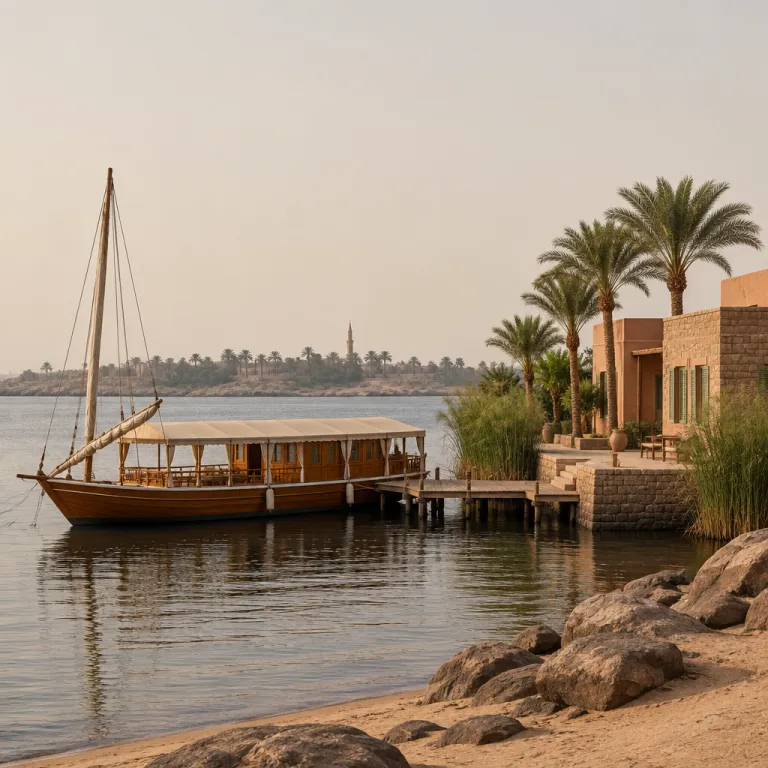
Elephantine Island in Egypt as a gateway to refined Nile journeys
Elephantine Island in Egypt sits quietly in the Nile River opposite central Aswan. This low, rocky stretch of land lies at the very edge of Nubian culture, where the river narrows and granite boulders frame the water dramatically. For luxury travellers, the island and its surroundings form a serene counterpoint to the busy city on the east bank.
The history of this island stretches back to ancient Egypt, when it guarded the southern frontier of the kingdom. Here, ancient Egyptians built the temple Satet and the temple Khnum as part of a wider temple complex that controlled trade and the sacred Nile waters. These well preserved archaeological sites now shape how discerning visitors plan their time visit and choose nearby hotels or Nile cruises.
Today, Elephantine Island in Egypt sits at the meeting point of heritage and hospitality, with premium hotels overlooking the river and the island ancient ruins. Many guests pair a stay facing Elephantine with a multi night cruise along the Nile River, using Aswan as a graceful embarkation point. This combination of island calm, archaeological depth, and river travel defines the most rewarding luxury itineraries in southern Egypt.
Choosing a luxury Nile cruise that complements Elephantine Island
For travellers focused on Elephantine Island Egypt, the choice of Nile cruise matters as much as the hotel. A refined vessel on the Nile River allows you to glide past temples and archaeological sites that echo the same ancient Egyptian history found on the island. Selecting the right cruise means aligning cabin style, onboard service, and shore excursions with your expectations for comfort and cultural depth.
High end cruises between Cairo, Luxor, and Aswan often include guided visits to major temples, but not all itineraries highlight Elephantine or the nearby Aswan Museum. When comparing options, look for programs that mention the temple Satet, the temple Khnum, or other island ancient remains as part of their archaeological focus. A detailed planning resource such as this refined guide for luxury Nile cruises from Cairo to Luxor can help you match cruise routes with your preferred time visit in Aswan.
Some luxury ships moor close enough that you can see Elephantine Island in Egypt from the sundeck, watching the water traffic move between the city and the island. Others coordinate private tenders so guests can visit the archaeological sites early, before day trippers arrive from the wider region of Egypt. When you evaluate cruise brochures, check how often they mention Aswan, Elephantine, and related temples, because this reveals how seriously they treat the area’s history and culture.
Staying in style near Elephantine Island and pairing hotels with cruises
Luxury hotels around Elephantine Island in Egypt tend to cluster along the Nile Corniche and on the river islands themselves. Many suites face the island elephantine landscape, with balconies that frame the water, the city skyline, and the archaeological sites in a single view. This setting allows guests to experience ancient Egypt from the comfort of a contemporary Egyptian property.
When choosing where to stay, consider how the hotel coordinates with your chosen Nile River cruise and your planned visit to Elephantine Island. Some premium properties offer private boat transfers directly to the island, while others arrange curated tours that include the temple Satet, the temple Khnum, and the Aswan Museum in one seamless itinerary. For example, historic grand hotels in Aswan often work with licensed Egyptologists to design private, after hours visits to key sites, adding a sense of exclusivity to the experience.
Travellers who want to sail between Luxor and Aswan in style often book a hotel both before and after their cruise, using Elephantine Island in Egypt as a visual anchor for their stay. A specialised resource such as this guide on how to choose the right Nile cruise between Luxor and Aswan helps you synchronise embarkation dates, room categories, and shore excursions. By aligning hotel reservations with cruise schedules, you avoid rushed transfers and gain extra time visit the island ancient ruins at a relaxed pace.
Elephantine’s temples, museums, and the layered history of Aswan
Elephantine Island in Egypt is more than a scenic stop; it is a compact archive of layered history. The temple complex dedicated to Satet and the temple Khnum reflects how ancient Egyptians worshipped the Nile’s annual flood and the river’s life giving water. Walking among these temples, you move through traces of the Old Kingdom, the Middle Kingdom, and later periods in a single archaeological zone.
Nearby, the Aswan Museum is located on the island and presents artefacts from Elephantine and other archaeological sites along the Nile River. Exhibits explain how the island functioned as a frontier post, a religious centre, and a trading hub linking Egypt with Nubian lands further south. For travellers, this museum visit transforms scattered ruins into a coherent narrative, making each block of granite and each inscription part of a larger story about power, faith, and the kingdom’s southern border.
Beyond the museum, you can explore well preserved remains of ancient Egyptian houses, fortifications, and nilometers that measured the river’s height. These structures show how ancient Egyptians adapted to the river’s rhythms and how the city of Aswan grew around this strategic island. When planning your time visit, allow at least a half day on Elephantine so you can appreciate both the temples and the quieter residential ruins.
Nubian culture, Jewish history, and the global echoes of Elephantine
The cultural story of Elephantine Island in Egypt extends beyond pharaonic monuments into Nubian and Jewish history. On and around the island, Nubian communities have long maintained traditions shaped by the Nile River, the desert, and the borderlands between Egypt and Sudan. Their colourful houses, river craft, and music add a living dimension to the archaeological backdrop.
Historically, Elephantine also hosted a community of Jews, often referred to as the Jews of Elephantine, who lived here during the Persian period. Scholars have identified references to a Jewish temple on the island, and papyri from this community reveal how Jews in Elephantine navigated life under Egyptian and imperial authorities. When guides mention the phrase “jews elephantine” or “jewish temple on Elephantine”, they are pointing to this rare intersection of Egyptian, Nubian, and Jewish traditions in a single island ancient setting.
For modern travellers, this layered past enriches a luxury stay near Elephantine Island in Egypt, because it connects the comfort of your hotel or cruise with a broader human story. You may hear comparisons with other water bound heritage landscapes such as the Dead Sea region or Jordan’s Wadi Rum, yet Elephantine remains uniquely tied to the Nile River and the city of Aswan. Engaging with Nubian hosts, museum curators, and licensed guides ensures that your visit respects local perspectives while deepening your understanding of this complex frontier island.
Planning your time on Elephantine Island within a wider Egyptian itinerary
Thoughtful planning around Elephantine Island in Egypt can elevate an entire Nile journey. Many travellers arrive in the city of Aswan by air or rail, then use the island as a calm base before or after a cruise. Because the island is located close to the main riverbank, short boat rides connect you quickly to hotels, the museum, and the temples.
When structuring your time visit, consider how long you want to spend on archaeological sites versus relaxing by the water. A typical pattern for luxury travellers includes one full day focused on Elephantine’s temple complex, the Aswan Museum, and guided walks through Nubian quarters, followed by a quieter day enjoying hotel amenities and river views. If you are combining Aswan with other destinations in Egypt such as Luxor, Abu Simbel, or even side trips to the Dead Sea or Wadi Rum, build in buffer days so that delayed flights or trains do not reduce your island time.
Remember that temperatures along the Nile River can be intense, especially at midday, so early morning or late afternoon are ideal for exploring the temple Satet, the temple Khnum, and other exposed ruins. Many high end hotels and cruise lines offer flexible excursion timings for Elephantine Island in Egypt, allowing you to return to the water or the shade when the sun is strongest. By pacing your days carefully, you can appreciate both the history and the hospitality that define this distinctive island elephantine setting.
How Elephantine Island shapes luxury Nile cruise experiences
For many guests, Elephantine Island in Egypt becomes the emotional anchor of a longer Nile cruise. Watching the island ancient silhouette appear at dawn or glow at sunset from a ship’s deck creates a sense of arrival that no airport can match. This visual connection between water, temples, and city helps frame the entire journey through ancient Egypt.
Cruise directors who understand the significance of Elephantine often design itineraries that weave the island’s history into lectures, tastings, and curated shore excursions. They may invite Egyptologists to explain how the Middle Kingdom fortified this frontier, how ancient Egyptians measured the Nile’s flood here, or how the Jews of Elephantine left written records that still inform scholarship. When these narratives are paired with visits to the temple complex, the Aswan Museum, and nearby archaeological sites, guests gain a multi dimensional view of the kingdom that once ruled these banks.
From a practical standpoint, choosing a cruise that highlights Elephantine Island in Egypt usually means more time on the water around Aswan and fewer rushed transfers. You might spend an extra evening moored near the city, enjoying views of the island elephantine profile while dining on deck or in a panoramic lounge. For travellers who value both comfort and context, this balance between river scenery, well preserved heritage, and attentive service is what turns a standard itinerary into a genuinely memorable Nile River voyage.
Key figures and travel statistics for Elephantine Island and Aswan
- Aswan is one of Upper Egypt’s most visited cities, and many itineraries include Elephantine Island in Egypt as a highlight alongside nearby temples and desert excursions.
- Typical Nile River cruise durations between Luxor and Aswan range from three to seven nights, giving travellers multiple opportunities to schedule a time visit to Elephantine’s archaeological sites.
- Regional tourism surveys consistently show that a large share of luxury travellers to Aswan prioritise river views of Elephantine when selecting premium hotels along the Nile.
- Archaeological missions have documented multiple construction phases within the Elephantine temple complex, spanning from the Old Kingdom to the Ptolemaic period, illustrating the site’s long religious significance.
- Climate data for Aswan show more than 3,800 hours of sunshine per year, which strongly influences recommended visiting hours for exposed sites such as the temple Satet and the temple Khnum on Elephantine Island.
FAQ about Elephantine Island in Egypt and luxury Nile travel
How much time should I plan to spend on Elephantine Island ?
Most luxury travellers allocate at least half a day on Elephantine Island in Egypt, combining the temple complex, the Aswan Museum, and a walk through local villages. If you enjoy archaeology and photography, a full day allows for slower exploration and breaks by the water. Align your time visit with cooler morning or late afternoon hours for comfort.
Can I visit Elephantine Island as part of a Nile cruise ?
Yes, many Nile River cruises that stop in Aswan offer optional or included excursions to Elephantine Island in Egypt. Some ships arrange private boats directly from the vessel to the island, while others coordinate transfers through local operators. When booking, check whether Elephantine, the temple Satet, and the temple Khnum are specifically mentioned in the excursion list.
Are the archaeological sites on Elephantine suitable for all fitness levels ?
The main archaeological sites on Elephantine Island in Egypt involve walking over uneven ground, stone steps, and sandy paths. Most visitors with moderate fitness can manage the routes, but supportive footwear and sun protection are essential. If mobility is a concern, ask your hotel or cruise concierge to arrange a tailored visit that focuses on the most accessible areas.
Is it better to stay on the island or on the Aswan mainland ?
Choosing between a stay on Elephantine Island and the Aswan mainland depends on your priorities. Island based properties offer immediate access to water views and a quieter atmosphere, while mainland hotels provide quicker access to the wider city and transport hubs. Many luxury travellers split their stay between both sides of the river to experience each perspective on the Nile.
How does Elephantine compare with other historic water landscapes like the Dead Sea or Wadi Rum ?
Elephantine Island in Egypt differs from regions such as the Dead Sea or Wadi Rum because it combines an active Nile River setting with dense archaeological layers and a living city nearby. The island’s temples, the Aswan Museum, and Nubian communities create a blend of history and daily life that is unique to this stretch of the Nile. Travellers often pair these destinations within a broader Middle East itinerary, but Elephantine offers a distinctly Egyptian riverine experience.