Discover the best hotels in Giza–Cairo, from luxury pyramids view resorts to intimate guesthouses. Compare distances to the Giza plateau, room types with pyramid views, and when to stay in Giza versus central Cairo.
Staying in the Giza–Cairo district: who it really suits
Stone silhouettes on the horizon at dawn, car horns from Al Haram Street below, a faint call to prayer rolling over the plateau. Choosing a hotel in the Giza–Cairo district is first and foremost a choice of atmosphere. You trade the polished bustle of central city hotels in downtown Cairo for proximity to the Giza Pyramids and the Great Sphinx, with all the sensory intensity that comes with this edge-of-desert location.
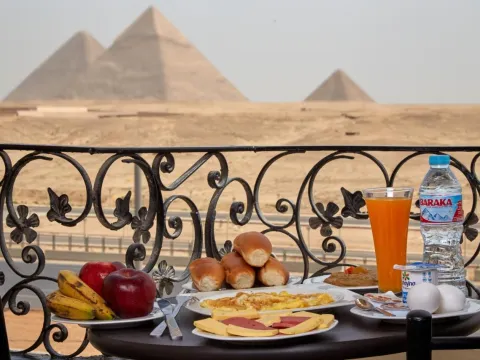
This area suits travellers who want the pyramids to anchor their stay, not just appear as a half-day excursion. If you book a hotel in Giza Egypt, you can be at the plateau gates in minutes rather than crossing the city in traffic. Guests who value a pyramids view from their room, terrace, or pool will find more options here than in any other part of Cairo, from classic Giza hotels to smaller inn-style accommodations tucked into side streets.
There is a trade-off. You gain immediate access to the Giza Pyramids but sit farther from Cairo’s museums, galleries, and Nile-side promenades. For a first visit focused on ancient sites, staying in Giza makes sense; for a nightlife-heavy itinerary, a central Cairo hotel may be more convenient. Many travellers split their stay Giza / Cairo, starting with two or three nights near the pyramids, then moving into the city hotels for a different rhythm.
Quick pick: best hotels in Giza for pyramids views
- Marriott Mena House, Cairo (5★) – Luxury resort about 700–900 m from the main Giza plateau entrance (roughly 10–15 minutes on foot, 5 minutes by car in light traffic). True pyramids view rooms are usually labelled “Pyramids View” or “Pyramids Suite”; garden and pool categories generally face lawns or courtyards.
- Steigenberger Pyramids Cairo (5★) – Full-service hotel opposite the plateau area, around 1.5–2 km from the ticket gates (about 5–10 minutes by taxi depending on traffic). Rooms explicitly described as “Pyramids View” or “Deluxe Pyramids View” look towards the plateau; standard city-side rooms overlook the road or surrounding buildings.
- Hayat Pyramids View Hotel (3–4★) – Mid-range property roughly 800–1,000 m from the Sphinx entrance (about 10 minutes’ walk, less by car). Rooftop restaurant and selected “Pyramids View” rooms face the monuments; other categories may look onto side streets or inner courtyards.
- Pyramids View Inn (3★ guesthouse) – Intimate inn directly across from the Sphinx area, typically under 500–700 m from the main gate (5–10 minutes on foot). Many rooms and the rooftop terrace offer frontal views; check for “Deluxe Pyramids View” wording to secure a direct line of sight.
- Best View Pyramids Hotel (3★) – Budget-friendly hotel about 1 km from the plateau entrance (around 10 minutes’ walk or a short taxi ride). Only rooms clearly marked “Pyramids View” or “Panoramic View” face the site; lower-priced options can overlook neighbouring buildings.
- Egypt Pyramids Inn (3★ guesthouse) – Small inn-style hotel within roughly 600–900 m of the Sphinx gate (5–10 minutes on foot). Rooftop terrace and selected “Pyramids View” rooms look towards the plateau; standard rooms may have partial or side views.
- Panorama Pyramids Inn (3★ guesthouse) – Compact property near the main viewing area, usually under 1 km from the entrance (about 10 minutes’ walk). “Panoramic Pyramids View” rooms and the shared roof offer wide-angle vistas; other categories can be more inward-facing.
- Guardian Guest House (guesthouse, 2–3★) – Simple but well-located guesthouse opposite the plateau, around 500–800 m from the gate (5–10 minutes on foot). Several rooms and the rooftop terrace provide direct pyramids views; basic categories may have limited or angled sightlines.
Distances and times are approximate, based on typical driving and walking routes shown on common mapping tools and recent guest feedback about access and views.
Location on the ground: streets, distances, and daily logistics
Traffic defines Cairo, and Giza is no exception. Hotels located along Al Haram Street (Pyramids Road) place you on the main artery that runs directly towards the Giza plateau, but they also expose you to constant movement: microbuses, taxis, tour coaches, and the occasional horse cart. A pyramids inn or small inn hotel on a side lane off this road can feel more residential, with local bakeries and kiosks just outside the door.
From most Giza hotels around the plateau, you are roughly 1 to 2 km from the main entrance to the Giza Pyramids and the Great Sphinx. That can be a 5 to 15 minute ride depending on traffic, or a walk if you are comfortable with uneven pavements and crossing busy streets. Hotels Cairo in downtown, by contrast, sit about 12 to 15 km away; in peak hours, that distance can stretch into a 45 to 60 minute drive.
Look closely at where a hotel is located in relation to the plateau gates, not just whether it advertises a pyramids view. A view hotel perched higher up the hill behind the Sphinx entrance might offer spectacular sunsets but require a short taxi ride to reach the ticket office. Properties closer to Al Mansouria Road, near the canals west of the pyramids, feel more rural and quieter at night, but you will rely on cars for almost every outing.
Recent guest reviews often mention that hotels directly on Al Haram Street are convenient for catching taxis and ride-hailing services but can be noisy late into the night, while side-street guesthouses trade some immediacy for calmer evenings and easier sleep.
Pyramids view versus city focus: choosing your perspective
Sunrise over the desert ridge, the pyramids turning from grey to honey-gold, is the defining argument for booking a hotel Giza side rather than a Cairo city hotel. A true pyramids view is frontal and unobstructed, ideally taking in at least two of the main pyramids and, for the most coveted rooms, a glimpse of the Great Sphinx. Some accommodations offer this from private balconies, others from shared rooftops or restaurants only, so always check which spaces actually face the plateau.
Not every pyramids hotel has equal sightlines. A property may market itself around the Giza pyramids but only certain floors or room categories enjoy the panorama, while lower levels look onto neighbouring buildings or side streets. When you check availability, pay attention to room descriptions that specify “pyramids view” or similar wording, and understand that these are usually limited in number. Guests who care deeply about the view should prioritise this over marginal differences in room size.
There is a counterpoint. A Cairo hotel along the Nile or in Garden City will not offer a pyramids view, but it will immerse you in a different urban story: embassies, leafy streets, and easier access to the Egyptian Museum and downtown cafés. For some travellers, especially on repeat visits, the city’s cultural life outweighs waking up to the plateau. A balanced itinerary might mean two nights in a pyramids inn or Giza hotel for the spectacle, followed by several nights in central hotels Cairo for museums and dining.
Many travellers report that combining a pyramids view hotel in Giza with a Nile-side stay in central Cairo gives them both the sunrise-over-the-desert experience and easier evening access to restaurants, galleries, and river promenades.
Types of accommodations in Giza: from classic hotels to intimate inns
Choice in Giza runs wider than many expect. Large, established hotels cluster near the main access roads, offering full-service facilities, multiple restaurants, and expansive grounds. These suit guests who want a self-contained stay Giza, where they can move from pool to spa to dinner without leaving the property, and where staff are accustomed to arranging private guides and transfers to the plateau at specific times of day or night.
Smaller properties, often described as inns or guesthouses, line the streets behind the Sphinx entrance and along quieter residential blocks. These inn hotel options tend to have fewer rooms, more personal interaction with the host équipe, and rooftop terraces where breakfast is served with a direct line of sight to the pyramids. They are popular with independent travellers who prefer a more local feel and do not need the full range of services of larger city hotels.
There are also simple, cheap hotel choices scattered along Al Haram Street and its offshoots. These can be practical for travellers who prioritise location and sat price over amenities, but they rarely deliver the polished experience that a luxury-focused guest expects. If you are used to premium Cairo hotel standards, focus your booking on well-established hotels Giza or carefully reviewed guesthouses rather than the lowest advertised price.
When comparing options, look for concrete details in descriptions and reviews: mention of 24-hour reception, reliable hot water, functioning lifts, and consistent Wi‑Fi can matter as much as star ratings, especially in smaller pyramids view hotels Giza side.
What to check before booking: rooms, services, and practical details
Room categories in the Giza–Cairo district vary more by orientation than by décor. When you check availability, distinguish clearly between rooms with a pyramids view, partial view, and no view at all. A “city side” room might look towards Cairo’s skyline or onto a busy road; a “garden” or “courtyard” room can be quieter at night but offer no direct sight of the plateau. Decide whether you want to pay for the spectacle or for calm.
Confirm which services are included and which are charged. Some hotels offer free access to pools and fitness areas, while others treat them as separate facilities. Airport transfers, plateau shuttles, and late check-out often come with a fee, and the structure of these extras can matter more than the base price of the room. For guests planning early-morning or after-hours visits to the Giza Pyramids sound-and-light show, reliable transport arrangements are worth prioritising.
- Verify whether your room type guarantees a pyramids view or faces the city.
- Check typical transfer times from the hotel to the plateau and to central Cairo.
- Confirm costs for airport pick-up, local taxis, and plateau shuttles in advance.
- Read recent reviews that mention noise, cleanliness, and staff responsiveness.
Look at the immediate surroundings as carefully as the interiors. A hotel located directly on Al Haram Street will give you instant access to taxis and ride-hailing services, but you will hear traffic late into the night. A property set back on a side lane may feel more peaceful but require a short walk to find a car. When reading reviews, focus on comments about noise levels, actual walking times to the plateau, and the consistency of the pyramids view rather than generic praise.
Hotel websites and mapping tools can help you cross-check claims about distance to the Giza plateau, while guest comments often reveal whether advertised shuttles run on time and how staff handle early departures or late arrivals.
Who should stay in Giza, and who is better in central Cairo
Travellers with a short stay and a clear priority for the Giza Pyramids benefit most from basing themselves in Giza Egypt. If you have two or three nights in the city and dream of watching the sun set behind the plateau from your balcony or rooftop, a pyramids hotel or intimate pyramids inn is the right call. Families with children often appreciate minimising transfer times to the site, especially in the midday heat.
Guests who plan to explore Islamic Cairo, Zamalek’s galleries, or the cafés around Talaat Harb Street may find a central Cairo hotel more efficient. From there, day trips to Giza are straightforward, and you return at night to a neighbourhood with more varied dining and nightlife. Business travellers, too, usually prefer hotels Cairo side, closer to offices and administrative districts, using a single afternoon or evening for a focused visit to the plateau.
A hybrid strategy works well for longer trips. Start with a stay Giza for the immersive desert edge experience, then move to a hotel Cairo in Garden City or Downtown for museums and river life. This way you enjoy both faces of the metropolis without compromising on what matters most to you: the view, the rhythm of the night, or the ease of moving between meetings and monuments.
For many visitors, this split-stay approach delivers the best of both worlds: sunrise and sunset over the pyramids from a Giza base, followed by evenings in central Cairo’s restaurants, bars, and cultural venues before departure.
FAQ
Is the Giza–Cairo district a good base for first-time visitors?
For a first visit centred on the Giza Pyramids and the Great Sphinx, staying in Giza is an excellent choice. You are minutes from the plateau, can visit early or late to avoid crowds, and many hotels offer a direct pyramids view. If you also want intensive time in museums and historic Cairo, consider splitting your stay between Giza and a more central district.
How far are Giza hotels from central Cairo attractions?
Most Giza hotels near the plateau sit roughly 12 to 15 km from central Cairo areas such as Downtown and Garden City. In light traffic this can be a 25 to 30 minute drive, but at peak times it may stretch to 45 minutes or more. If your plans involve frequent trips to city museums, galleries, or business districts, factor this commute into your choice of hotel.
What should I check before booking a hotel in Giza?
Before booking, verify whether your room category truly includes a pyramids view, how far the property is from the plateau entrance, and what services are included in the rate. Pay attention to comments about noise, especially for hotels located on Al Haram Street, and check availability for the specific nights you need, as pyramids-facing rooms are often limited. Clarify details such as airport transfers and plateau transport if those are important to your stay.
Are there quiet areas to stay near the Giza Pyramids?
Quieter options tend to be set back from the main roads, on side streets behind the Sphinx entrance or towards the more residential lanes off Al Mansouria Road. These locations reduce traffic noise at night but usually require short taxi rides to reach the plateau gates or restaurants. If calm is a priority, look for guesthouses or smaller inns in these pockets rather than properties directly on the main thoroughfares.
Who is better suited to staying in central Cairo instead of Giza?
Travellers focused on Cairo’s urban culture, dining, and business districts are generally better served by staying in central Cairo. A city hotel near the Nile or Downtown offers easier access to museums, historic mosques, and contemporary nightlife, with Giza visited as a dedicated half-day or full-day excursion. This arrangement suits repeat visitors, business guests, and anyone for whom the pyramids are one highlight among many rather than the core of the trip.