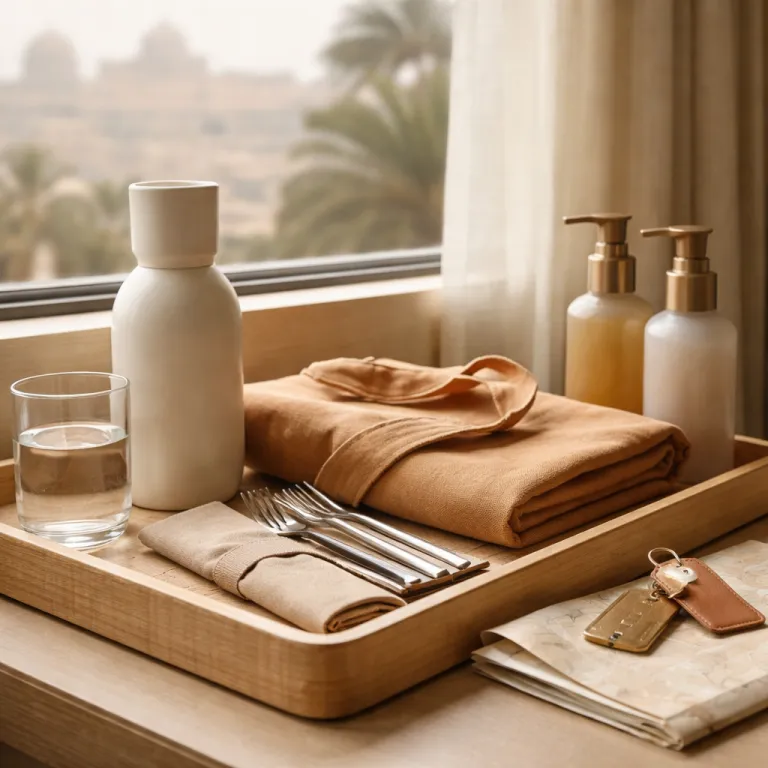
Where sustainable luxury in Egypt really starts: your route, not your room
Most conversations about sustainable luxury in Egypt start with linen napkins and recycled glass water bottles. The real carbon story for business leisure travelers actually begins long before the welcome drink, at the moment you choose how to move between Cairo, Luxor and Aswan. If you care about sustainable luxury Egypt in a serious way, your first decision is not which luxury hotels to book but which journeys you are willing to slow down.
Domestic flights between Cairo and Luxor or Aswan are efficient for your calendar yet heavy for your footprint. Typical round trip emissions on these short hops sit in the range of 140–170 kilograms of CO₂ per passenger in economy class, based on standard short haul factors from tools such as the ICAO Carbon Emissions Calculator and UK BEIS guidance (2023 datasets), while the overnight Watania sleeping train on the same corridor is materially lower for the same distance and transforms a transfer into a night of travel rather than a dead hotel stay. For guests extending a work trip, choosing rail over air is often the single most effective sustainable decision you can make in Egypt, more impactful than any eco friendly bathroom amenity in even the best luxury hotels.
There is a counter argument that luxury travel is structurally carbon intensive and that talking about sustainable living in this context is theatre. That argument has weight, especially when you factor in the diesel burn of a typical Nile cruise, where a four night sailing can consume more fuel per guest night than many eco lodges on land, according to industry fuel use estimates and operator disclosures that convert total fuel consumption per voyage into an approximate per passenger figure. Yet when you compare a short, flight heavy itinerary with a longer, slower circuit that uses trains, a carefully chosen eco lodge and one thoughtfully selected Nile cruise, the per leisure day emissions can fall significantly.
Consider a common pattern for executives visiting Cairo for meetings. Many arrive for three nights in a central luxury hotel, then bolt on a quick flight to Luxor for a two night stay and a rushed temple circuit before flying straight out, stacking flights and airport transfers. A more disciplined version of sustainable luxury Egypt keeps the same five business nights in Cairo, then adds two extra nights but replaces one flight with the overnight train and swaps a conventional resort for an ecolodge that runs on solar and traditional techniques, lowering the carbon cost per day of leisure.
Cairo is where this mindset shift is easiest to apply because the city now blends high service luxury hotels with a growing ecosystem of sustainable brands. You can stay at a riverfront property, then walk or take a short taxi to The Veer, Saqhoute or YARAISMAIL, where sustainable fashion is not a slogan but a supply chain that supports local communities. When you carry a vegan leather bag from The Bag Egypt or a recycled fabric accessory from Reform Studio on your next leg to the Red Sea or Siwa Oasis, you extend the logic of responsible luxury beyond the hotel lobby into every part of your stay.
To make the trade offs more concrete, consider indicative emissions per person for a Cairo–Luxor–Aswan circuit using commonly cited factors: (1) domestic flight Cairo–Luxor round trip: roughly 150 kg CO₂ per passenger; (2) overnight sleeper train Cairo–Luxor one way plus a single flight Aswan–Cairo: around 90–110 kg CO₂ in total, assuming rail emissions of 20–30 kg and one short haul flight of 70–80 kg; (3) four night Nile cruise Luxor–Aswan with no extra domestic flights, where aggregated fuel use data suggests approximately 25–40 kg CO₂ per guest night, or 100–160 kg for the voyage, depending on vessel efficiency and occupancy. These are order of magnitude comparisons rather than precise footprints, but they show how swapping one flight for rail or consolidating hotel nights into a cruise can materially shift your impact.
Choosing properties that walk the talk, from the Red Sea to the desert
Once you have disciplined your transport, the second decision point for sustainable luxury Egypt is the type of property you choose. Not all luxury hotels in Egypt are created equal, and the gap between marketing language and measurable impact can be wide. The properties that matter most are those where eco friendly operations, cultural preservation and support for local communities are embedded in the architecture of the stay, not just in a towel reuse card.
On the Red Sea, Kempinski Hotel Soma Bay and Mövenpick Resort El Quseir are often cited as benchmarks for sustainable luxury. Kempinski Soma Bay has maintained EarthCheck Gold status for multiple years, according to EarthCheck’s public listings and property level sustainability reports, while Mövenpick El Quseir has received repeated Green Globe Platinum level recognitions for its long term work on energy, water and waste, as documented in Green Globe certification summaries. For guests who want the best balance between resort level comfort and eco conscious practice, these hotels in Egypt show that a large scale property can still move the needle on emissions and resource use.
Further down the coast, in El Gouna and Marsa Alam, a new generation of eco lodge style properties is emerging. Some of these eco lodges use solar power, grey water systems and low rise architecture that respects the natural beauty of the Red Sea shoreline, while still delivering a refined luxury experience. When you compare a conventional all inclusive resort with a carefully run eco lodge in Marsa Alam or Gouna, the difference in energy intensity per guest night can be stark, especially when the eco lodge sources food from nearby farms and employs local staff at every level.
The desert is where sustainable luxury Egypt becomes most tangible. At Adrère Amellal in Siwa Oasis, guests sleep in hand built rooms made from kershef, a traditional mix of salt and mud that regulates temperature naturally, and the property operates off grid with no electric light at night. Visit eco-friendly resorts like Adrère Amellal in Siwa Oasis and explore sustainable fashion stores in Cairo and support local artisans by purchasing certified sustainable products.
Adrère Amellal is often described as an ecolodge, but its real power lies in how it anchors guests in Siwa’s culture and landscape. Nights are lit by kerosene lamps, meals are prepared using traditional techniques and ingredients from the oasis, and the architecture blends into the desert rather than dominating it. For travelers who want an ecolodge Siwa experience that feels both luxurious and sustainable, this is one of the best examples of how eco lodges can redefine what high end hospitality looks like in Egypt.
Nearby, Taziry Ecolodge and the smaller Amellal inspired properties around Siwa show another path for sustainable luxury. These eco lodges use similar materials and traditional building methods, but each stay offers a different angle on cultural immersion, from guided walks with local communities to workshops on Siwan crafts. If you want a deeper analysis of these properties and other eco lodges across the desert, our dedicated guide to luxury eco hotels in Egypt offers a detailed look at sustainable elegance in the heart of the desert on our luxury eco hotels in Egypt overview.
The Nile cruise dilemma and the business leisure paradox
The third decision point for sustainable luxury Egypt is the one most travelers underestimate. Nile cruises are seductive, efficient and deeply woven into the mythology of Egyptian travel, yet they are also diesel hungry and structurally hard to decarbonize. A typical four night Nile cruise between Luxor and Aswan burns more fuel per guest night than a comparable stay in many eco friendly hotels Egypt wide, even when those hotels run air conditioning, according to aggregated industry fuel use estimates that divide total liters of diesel per sailing by the number of occupied cabins.
So should a sustainability minded executive skip the Nile cruise entirely? Not necessarily, but the way you integrate a cruise into your itinerary matters more than the brand of refillable water bottle on deck. If you are flying into Cairo for meetings, then adding a short flight to Luxor, a four night cruise and another flight back to Cairo for departure, you are stacking emissions at every step of the journey.
A more disciplined approach to sustainable luxury Egypt treats the cruise as a replacement for multiple hotel nights and transfers, not an add on. Take the overnight train from Cairo to Luxor, board a carefully chosen vessel that invests in waste management and local sourcing, then disembark in Aswan and fly out once, rather than doubling back. In this model, the Nile cruise becomes part of a lower carbon chain that includes rail, a single domestic flight and a shorter list of properties, rather than a high carbon indulgence bolted onto an already flight heavy schedule.
This is where the business leisure paradox becomes interesting. Extending a four day work trip in Cairo to a seven day stay that includes a train journey and a carefully chosen eco lodge in Siwa or Marsa Alam can reduce your emissions per leisure day, even if the total footprint is similar. You are spreading the carbon cost of the intercontinental flight across more days of meaningful cultural immersion, rather than burning extra fuel for a rushed, high transfer weekend.
For example, imagine two executives flying from Europe to Egypt. The first spends four nights in Cairo, takes two domestic flights for a quick Red Sea weekend in Gouna, then flies home, stacking three flight segments inside Egypt and barely touching local culture. The second spends the same four nights in Cairo, then adds three nights split between an eco lodge in Marsa Alam and a desert ecolodge Siwa stay, traveling by train and car, engaging with local communities and supporting cultural heritage projects along the way.
The second itinerary may involve a slightly longer stay, but the per day impact is lower and the value to Egypt’s local communities is higher. When you choose properties like Adrère Amellal or Taziry Ecolodge that invest in cultural preservation and sustainable living, your spend supports traditional techniques, crafts and agriculture rather than only imported goods. In this sense, sustainable luxury Egypt is not about self denial but about redirecting your budget from high carbon transfers to high value experiences that respect natural beauty and culture.
A practical protocol for booking sustainable luxury in Egypt
For business leisure travelers who want a clear playbook, sustainable luxury Egypt can be approached as a simple protocol. Start with transport, then property type, then length of stay, and only then look at the details like amenities and spa menus. This order matters because the biggest emissions decisions sit at the top of the chain, not in the minibar.
First, commit to at least one leg by rail instead of air between Cairo and Upper Egypt. If your schedule allows, use the overnight train in one direction and keep a single domestic flight for the other, balancing time and carbon. Second, choose at least one eco lodge or ecolodge style property in your itinerary, whether that is an eco lodge in Marsa Alam, an ecolodge Siwa stay at Adrère Amellal or Taziry Ecolodge, or a certified resort on the Red Sea that has verifiable sustainability credentials.
Third, extend your stay by one or two nights if it allows you to cut a domestic flight or a high transfer weekend. A seven night itinerary that combines Cairo, a Nile cruise and a desert eco lodge can be more sustainable per leisure day than a five night, flight heavy sprint that touches only airports and lobbies. When you allocate more time to each place, you also open space for cultural immersion, from walking tours in historic Cairo to slow evenings in Siwa Oasis, where the desert sky and the silence become part of the experience.
Fourth, direct your discretionary spend toward brands and initiatives that align with sustainable luxury Egypt beyond the hotel sector. Visit concept stores like The Veer or BOADK in Cairo, where sustainable fashion and wearable wood designs support local artisans, or choose haircare from Khali Min, which uses eco friendly ingredients from the Nile Delta. When you buy products certified by Economy of Love or support initiatives like SEKEM, you extend the impact of your stay into Egypt’s wider economy.
Finally, choose properties and experiences that respect cultural heritage and local culture in more than name. In Siwa, that might mean staying at an eco lodge built with traditional techniques, guided by Siwan hosts who share stories of the oasis and its history. For a deeper dive into refined desert escapes that balance luxury, natural beauty and cultural preservation, explore our dedicated guide to serene stays at hotels in Siwa Oasis Egypt on our Siwa Oasis hotel selection.
Across Egypt, from Cairo to the Red Sea and the far desert, the most meaningful form of sustainable luxury is not a marketing label. It is a series of disciplined choices about how you move, where you sleep and whom your money supports, from eco lodges and luxury hotels to local communities and cultural preservation projects. When you approach your next stay with this protocol, sustainable luxury Egypt stops being an abstract ideal and becomes a concrete, measurable way to travel well.
Key figures shaping sustainable luxury in Egypt
- Egypt’s hospitality market reached approximately USD 6.36 billion in value and is projected to grow to around USD 9.09 billion at a compound annual growth rate close to 3.85 percent, which means sustainable luxury will increasingly influence where new hotels in Egypt invest their capital (IMARC Group, Egypt Hotel Market Report, 2023 edition, based on pre and post pandemic performance data).
- Kempinski Hotel Soma Bay has maintained EarthCheck Gold certification for multiple years, signaling that large scale Red Sea resorts can meet rigorous environmental benchmarks while still delivering a high end stay for guests focused on sustainable luxury Egypt (EarthCheck certification database and property reporting, which track energy, water, waste and community indicators against regional baselines).
- Mövenpick Resort El Quseir has received multiple Green Globe Platinum level recognitions, placing it among the most decorated eco friendly luxury hotels in the region and setting a reference point for other Red Sea properties aiming to combine natural beauty with responsible operations (Green Globe listings and industry awards that summarize annual audit scores and continuous improvement plans).
- Short haul domestic flights such as Cairo to Luxor typically generate about 150 kilograms of CO₂ per passenger for a round trip, using standard emission factors for economy class from sources like the ICAO Carbon Emissions Calculator and UK BEIS data, while the equivalent overnight train journey produces significantly lower emissions, often below 30 kilograms of CO₂ per passenger, making rail one of the most effective levers for travelers seeking a lower carbon stay in Egypt.
- A standard four night Nile cruise between Luxor and Aswan generally burns more diesel per guest night than a comparable stay in many eco lodges or urban hotels, which is why integrating a cruise as a replacement for multiple transfers rather than an add on is critical for a genuinely sustainable luxury Egypt itinerary (aggregated industry fuel use estimates and cruise operator disclosures that convert liters of fuel per sailing into approximate emissions per occupied cabin).