The flavour map of Nubian cuisine in Aswan
Nubian cuisine in Aswan sits apart from mainstream Egyptian cooking, shaped by the Nile and by desert caravan routes rather than by Cairo’s Levant-leaning kitchens. Along this southern stretch of Egypt the food reflects a quieter rhythm: the river narrows, the valley tightens, and the flavours become deeper, earthier, more closely tied to ancient times and to the daily life of Nubia. For a solo traveler, this means that every plate of ful, every glass of karkadeh hibiscus tea, and every piece of warm Egyptian bread can feel like a direct conversation with the people who have lived on these banks since the era of the ancient Egyptians.
Think of Aswan as a series of dining frames, each revealing a different side of Nubian food culture in Egypt: the grand terrace of the Old Cataract, the mid-scale island restaurants on Elephantine, the intimate tables in an Aswan Nubian village guesthouse, and the street-level kushari counters that keep the city fed. The same core ingredients repeat across these places to visit — fava beans, lentils, Nile fish, slow-cooked meat stews, and flat bread — yet the dishes shift subtly with each kitchen, echoing how food has always adapted along the Nile corridor between Abu Simbel and the temples near Luxor. This is where you taste how cuisine becomes culture, and how the sites of the ancient valley are mirrored by living culinary rituals rather than by museum labels.
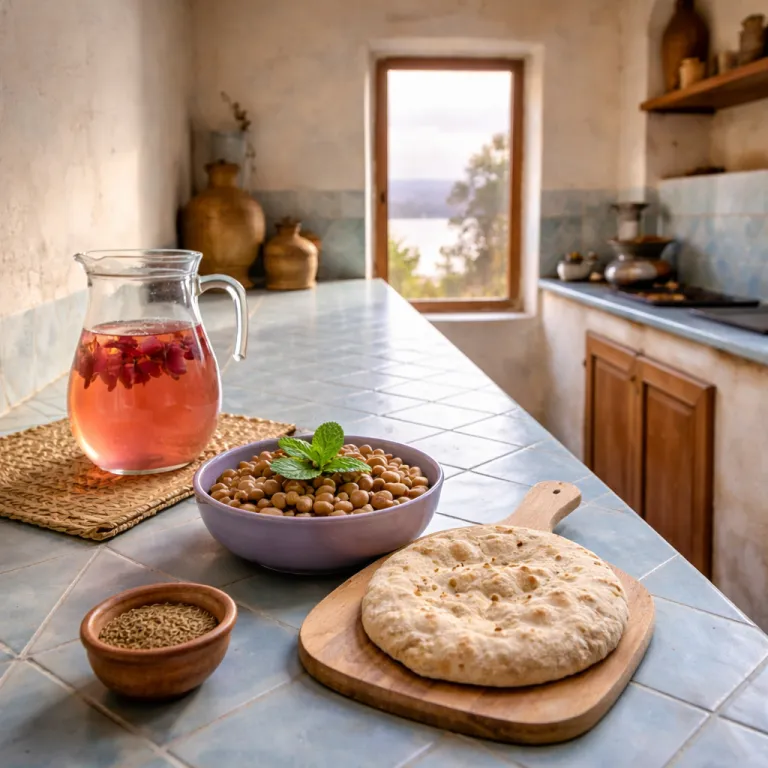
Hibiscus, or karkadeh, is your constant companion in Aswan, and it anchors many meals in both singular and shared moments. Hot, it is a deep crimson infusion that locals sip slowly in the cooler evenings; cold, it becomes a sharp, refreshing drink that cuts through the heat after a walk back from Philae Temple or from a felucca ride past the granite outcrops of the Nile. Order it wherever you sit — on a hotel terrace, in a village courtyard, or beside a street stall — and you will notice how this simple drink connects Egypt’s Nubian households, Egyptian dishes in city restaurants, and the broader culture of hospitality that still defines this part of Egypt.
Old Cataract terrace: karkadeh, mezze, and a solo seat above the Nile
The Sofitel Legend Old Cataract remains the formal reference point for dining with a view in Aswan, and its terrace is where many travelers first frame Nubian flavours against the slow-moving Nile. Arrive just before sunset, when the light softens over the valley and feluccas start to tack across the current, and ask for a table along the balustrade where you can watch Elephantine Island and the desert beyond without feeling marooned as a solo diner. Staff here are used to independent travelers, so a single cover is treated with the same care as a couple celebrating an anniversary, not as a problem to be solved.
Start with karkadeh served cold, then move into a mezze spread that nods to Egyptian dishes while staying rooted in the south: ful medames arrives in clay pots, tahini is dusted with dukkah, and warm bread comes charred at the edges, ready to scoop up every last trace of sauce. This is not where you chase the most traditional Nubian cuisine, but it is where you ease into the city’s food culture with a sense of ceremony, especially if you have just flown in from Cairo after following a different solo diner itinerary through hotel restaurants there via an eating in Cairo hotels guide. The menu usually includes grilled lamb, beef, and chicken, along with Nile fish that gestures toward the river’s importance without yet plunging you into the more rustic preparations found in Nubian villages.
For timing, book or walk in around an hour before sunset, then linger as the lights come up on the far bank and the silhouettes of camel caravans fade into the dark. Expect main courses in the range of 400–800 EGP, with non-alcoholic drinks from about 80 EGP, based on recent hotel menus published by the Egyptian Tourism Authority and the property itself. Wine lists in Egypt can be uneven, but here you can safely order a glass of a reputable Egyptian label, pairing it with grilled dishes while you watch the last felucca sails drop. By the time you leave, you will have oriented yourself to Aswan’s geography — the temples upstream, the sites ancient and modern downstream, the villages tucked along the west bank — and you will be ready to trade formality for something more intimate.
Elephantine Island lunches: Nile fish, hotel kitchens, and mid scale calm
Midday in Aswan belongs to the river, and Elephantine Island is where Nubian-inspired cuisine meets hotel efficiency without losing its sense of place. The Mövenpick Resort on the island benefits from access to fish caught the same morning in the Nile, which means that a grilled tilapia or perch here can taste cleaner and more precise than in many city restaurants. For a solo traveler, the property’s restaurants offer that rare combination in Egypt of attentive service, calm surroundings, and staff who are relaxed about a single guest taking a prime table with a full river view.
Order a simple sequence that lets the ingredients speak: a salad bright with local herbs, a plate of Egyptian bread still warm, then a main of Nile fish cooked with tomatoes, onions, and spices that echo ancient times without feeling heavy. You can ask for the fish to be served in small pieces off the bone if you prefer, which makes the meal easier to navigate alone while you watch boats shuttle between the city and the island’s Nubian village. This is also a good moment to compare how hotel kitchens interpret Egyptian dishes versus how they appear in more traditional Nubian homes, a theme explored in depth in our wider look at culinary adventures through Egypt’s luxury hotel scene.
Afternoons on Elephantine move slowly, so plan your lunch after a late morning walk through the island’s Aswan Nubian neighbourhoods or a boat trip toward the temples and sites ancient near the First Cataract. Public ferries and private motorboats run from the Corniche to the island in a few minutes, with crossings typically costing the equivalent of 0.25–1 USD depending on whether you join locals or charter a boat. If you are heading later toward Abu Simbel or to Philae Temple, this is the moment to fuel up with protein-rich chicken or fish dishes that will carry you through long transfers and early starts. The wine question is simpler at a property like this, where staff can guide you toward the better Egyptian bottles and away from labels that have not travelled well in the heat, allowing you to enjoy a glass without worrying about storage conditions.
West bank Nubian guesthouses: village tables and home cooked stews
Cross to the west bank and the mood shifts; here, Nubian cuisine in Aswan becomes intimate, shaped by family kitchens and by the daily rhythms of a village rather than by hotel schedules. Small guesthouses line the riverbank, often painted in bright blues and ochres, and many open their courtyards to non-staying guests for dinner if you arrange ahead. For a solo traveler, this is where the promise of authentic food in Egypt’s Nubian communities becomes real, with host-cooked meals served at shared tables that encourage conversation without forcing it.
Dinners usually revolve around stews cooked in tagen pots, with lamb or chicken simmered slowly alongside okra, tomatoes, and spices that recall ancient Egyptian larders while remaining firmly part of present-day village cuisine. Expect generous platters of rice, flat bread, and sometimes Nile fish grilled over charcoal, along with side dishes of lentils, greens, and salads chopped into small pieces to be scooped up by hand. Hibiscus tea appears again, often brewed stronger than in hotels, and you may also be offered local desserts that show how food and culture intertwine in Nubia, from semolina cakes to date-based sweets.
Solo diners are generally welcomed warmly in these spaces, though you should dress modestly and respect the slower pace of life in the village. Plan to arrive after the heat eases, perhaps following a late afternoon felucca ride or a visit to Philae Temple, so that you sit down to eat as the call to prayer rolls across the Nile and the sky darkens over the valley. Typical set dinners cost around 250–450 EGP per person, according to recent rates shared by local guesthouses and the Egyptian Tourism Authority. This is also where you feel most clearly how the legacy of the ancient Egyptians lives on not only in temples and sites ancient like Abu Simbel, but in the way people still gather around food, share bread, and talk late into the night beside the river.
Street kushari, timing, and where hotel dining quietly wins
Not every memorable plate in Aswan comes with a Nile view, and some of the most satisfying food moments for a solo traveler happen at street level. Kushari shops in the city centre serve bowls layered with pasta, lentils, chickpeas, and fried onions, a staple of Egyptian food culture that sits outside the narrower frame of Nubian cuisine in Aswan yet belongs firmly to daily life. Here, you order at the counter, take a seat wherever you find space, and eat quickly among office workers, students, and families, all united by a dish that costs far less than the average hotel meal yet delivers deep comfort.
These places to visit are ideal for lunch between excursions to temples and sites ancient, especially if you are heading out early the next morning toward Abu Simbel or returning late from a boat trip near Philae. Timing matters in Aswan, where the heat shapes the day; aim for an early breakfast, a substantial midday meal, then a lighter dinner, adjusting your schedule around felucca departures and around the opening hours of the main attractions. When you do choose to eat in your hotel, pick your moments carefully, because while many properties default to anonymous buffets, a few specific restaurants genuinely outshine nearby standalone options.
The Old Cataract terrace, the Mövenpick on Elephantine, and a handful of carefully run Aswan Nubian guesthouses are the exceptions where hotel or guesthouse dining beats outside options, thanks to fresher ingredients, better-handled meat and fish, and a stronger sense of place. For travelers planning their stays through a curated platform, this is where a resource like MyEgyptStay’s guide to elegant places to stay in Egypt becomes practical, steering you toward properties whose kitchens respect both Egyptian dishes and Nubian traditions. As one local guide likes to remind cautious visitors, “Ful medames, a traditional fava bean stew, is still the best way to taste the Nile valley,” and when asked, “Is it safe to dine alone in Aswan?” he answers simply, “Yes, Aswan is generally safe for solo travelers,” echoing advice from the Egyptian Ministry of Tourism and Antiquities.
From temples to tables: weaving food into an Aswan itinerary
Planning a two-day solo itinerary around Nubian cuisine in Aswan means thinking of meals as anchors rather than afterthoughts. Start with a morning walking tour through local markets, where you see the raw ingredients of Egyptian dishes laid out in abundance — sacks of lentils, piles of vegetables, stacks of flat bread — then move by boat toward a Nubian village for lunch. This combination of walking tours and boat trips keeps you close to the Nile while giving you enough structure to fit in key sites ancient and modern without rushing.
On your second day, pair a morning visit to Philae Temple with an afternoon rest, then head to a riverside restaurant or guesthouse for dinner, letting the day’s archaeological impressions settle as you eat. If you are extending your journey to Abu Simbel, consider how early departures will affect your meal times, and plan a hearty dinner the night before with protein-rich chicken or fish dishes that will sustain you through long drives. Throughout, use local currency for small purchases, stay hydrated with karkadeh and water, and remember that the average meal cost in Aswan remains modest compared with many luxury destinations, even when you choose higher-end hotel restaurants.
For solo travelers booking luxury and premium stays through platforms focused on Egypt Nubian experiences, the goal is not to tick off a list of restaurants but to understand how food, people, and place intersect along this stretch of the Nile. Each meal — from a quiet plate of ful in a village courtyard to a formal dinner above the river — becomes another lens on the culture that has grown here since ancient times. When you leave Aswan, the memories that linger will likely be as much about the taste of hibiscus and the warmth of shared bread as about any single temple façade or camel silhouette against the desert sky.
FAQ: solo dining and Nubian cuisine in Aswan
What is a must try dish for Nubian cuisine in Aswan ?
Ful medames is essential, especially when cooked slowly in clay pots and served with warm bread, but you should also seek out Nile fish grilled in village guesthouses and tagen-style stews with lamb or chicken that show how Nubian kitchens adapt Egyptian dishes to local tastes.
Is it safe to dine alone in Aswan as a solo traveler ?
Aswan is generally considered safe for solo travelers, and restaurants from hotel terraces to kushari shops are accustomed to single diners, though you should follow standard precautions, keep valuables discreet, and choose well-lit, busy places at night.
How much should I budget for meals in Aswan ?
Street food and simple local restaurants can cost only a few US dollars per meal, while hotel terraces and riverside venues are higher, so planning around the locally reported average of about 10 USD per meal gives a realistic baseline for mixing casual and more refined experiences.
Do I need to book Nubian guesthouse dinners in advance ?
Yes, most west bank Nubian guesthouses prepare food to order for a small number of people, so arranging your visit earlier in the day or through your hotel ensures they can shop, cook, and set a place for you at the shared table.
When is the best time of day to eat in Aswan’s heat ?
Plan an early breakfast, a substantial lunch before the peak afternoon heat, and a later dinner after sunset, aligning your meals with felucca schedules and temple opening hours so that you avoid walking long distances under the strongest sun.
References
Egyptian Ministry of Tourism and Antiquities; Egyptian Tourism Authority; United Nations World Tourism Organization.